Stop guessing at hours and count them instead
The tool above wants two things from you: where you are going and how long you plan to stay there. Give it those and it hands back the number of hours to put on your quote request. Nothing else on your booking moves the price as much as this one number.
Group transportation is priced by time. The vehicle and the driver belong to your group from the first pickup until the last drop-off, including the two hours the bus sits outside a restaurant while you eat. That makes "how long do we need it?" the hardest question for a first-timer to answer and the easiest one to get wrong.
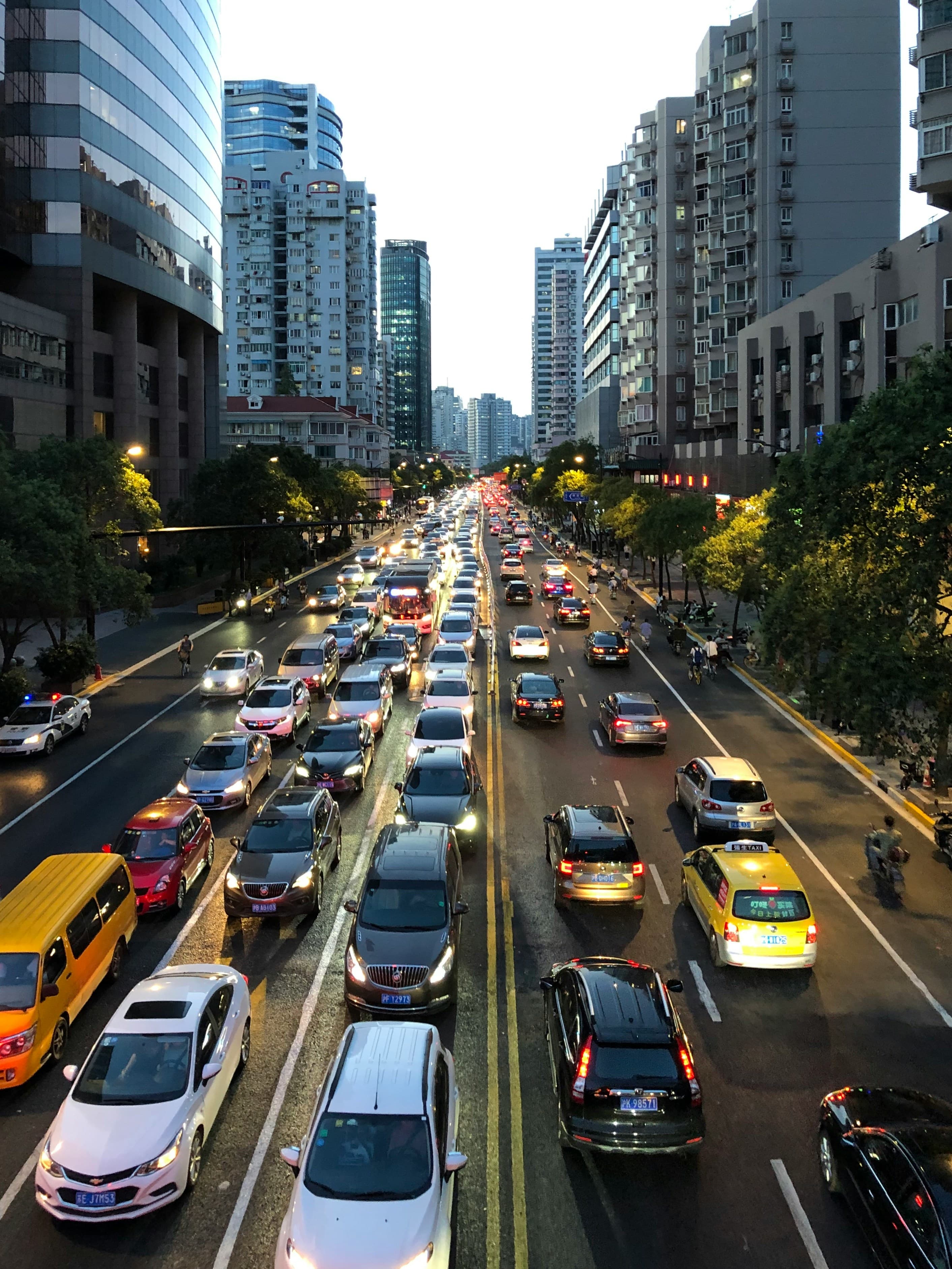
People guess low, every time. You remember the good parts: two hours at dinner, two at the bar. You forget the 25 minutes on Central, the ten minutes it takes twenty adults to find their shoes, and the ride home at the end. The estimator counts the forgettable minutes so you do not have to.
Use it for any trip with a middle. Birthday loops, brewery crawls, game days, concerts, wedding-day runs. A single straight transfer barely needs it. Anything with three stops absolutely does. Minimum rental time comes up in about 18% of the sales calls we analyze, usually phrased as the shortest booking someone can make. The better question is how long your night actually is, because running over is far more stressful than finishing with twenty minutes to spare.
Minimum rental time
Analyzed sales calls · 956 call records(CT-04)
Shares of past inquiries, not bookings, prices or availability. How we count these.
Every field, and where to find a good number
The estimator opens on a sample night with a dinner stop and a venue stop, so you can watch how it behaves before you touch anything. Then replace it with your evening.
- Separate pickup addresses. How many places the vehicle collects people, from 1 to 12. Everybody meeting at one house is 1. Three houses in three neighborhoods is 3.
- Stop name. Just a label for you, like "Dinner, Bishop Arts" or "AT&T Stadium." It does not touch the math.
- Drive min. Minutes of driving to reach that stop from wherever the bus was before. Look it up in a maps app set to the day and hour you will actually travel. Friday at six on the Dallas North Tollway is a different road than Sunday morning.
- Stay min. How long you will be inside. Be generous with yourself. A seated dinner for sixteen is ninety minutes on a good night. A brewery is about an hour. A concert is the whole show plus the walk back to the pickup zone.
- Add or remove a stop. The dashed button drops in a new leg with placeholder numbers. The small "×" takes one out.
- Drive home after the last stop. Minutes from your final stop to the final drop-off. With several drop-offs, use the time to the farthest one.
One quirk worth knowing. With multiple pickups, the tool adds loading time for each but not the driving between them. Fold that driving into your first stop's drive minutes and the total comes out right.
How your minutes become a rental window
The result panel shows its work in four lines, so you can argue with it if it looks wrong.
- Driving. Every stop's drive minutes plus the ride home.
- Time at stops. Every stay, added up.
- Loading and unloading. Ten minutes for each stop and each pickup address. Two stops and one pickup makes 30. That sounds generous until you watch a group of twenty say goodbye to a bartender.
- Traffic buffer. Ten percent of those three lines, rounded to the nearest minute.
Then the total rounds up to the next half hour, because nobody books a bus for five hours and 47 minutes.
The sample plan that loads with the tool works out like this:
| Line | How it is built | Minutes |
|---|---|---|
| Driving | 25 to dinner, 20 to the venue, 30 home | 75 |
| Time at stops | 90 at dinner, 120 at the venue | 210 |
| Loading | 2 stops plus 1 pickup, 10 minutes each | 30 |
| Traffic buffer | 10% of 315 | 32 |
| Total | 347 minutes, rounded up | 6 hours |
A note under your result reminds you that operators set their own minimums, so a quote can come back higher than your estimate on a busy night. That is not a mistake in the math.
Three real Dallas nights, run through the tool
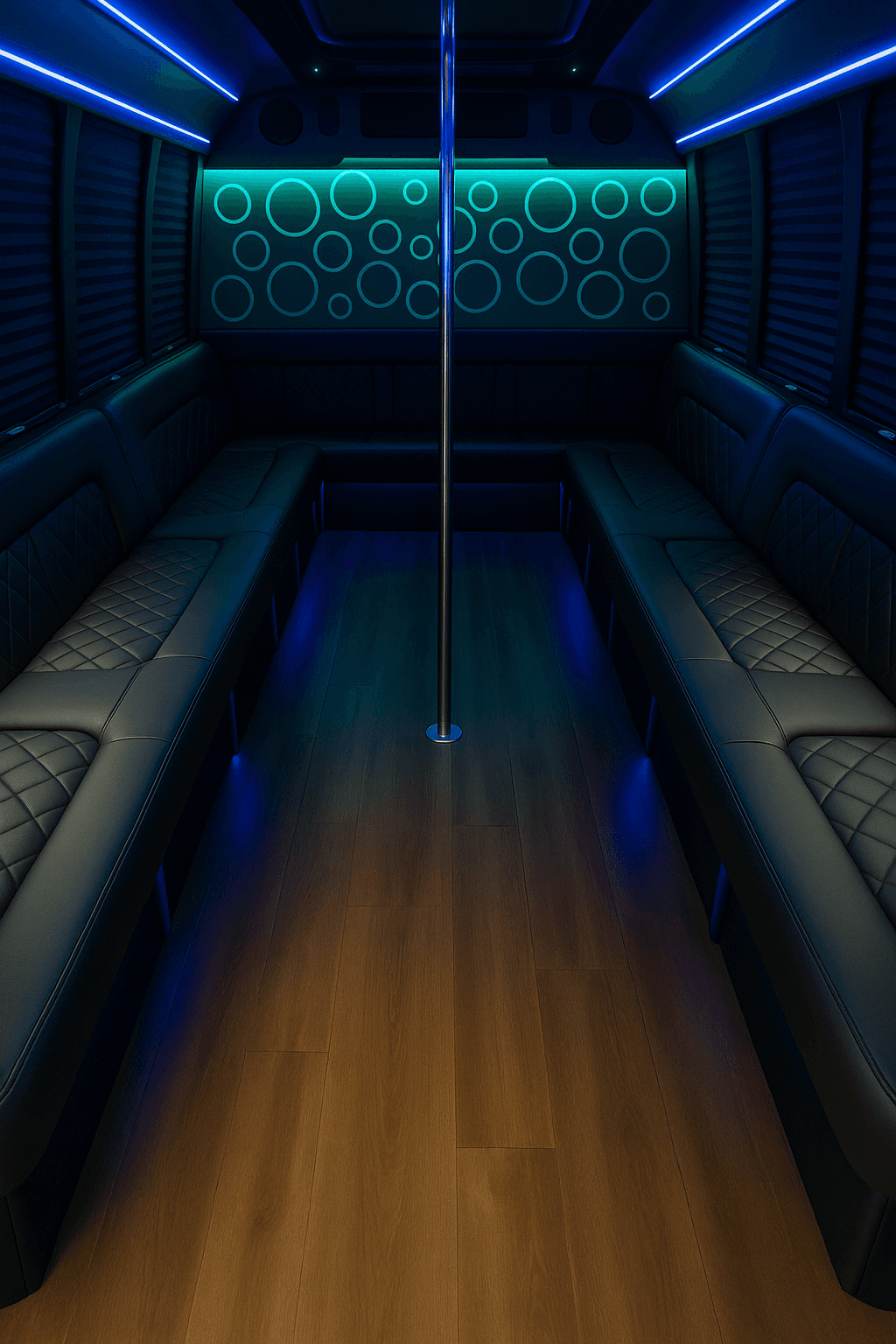
Birthday dinner and drinks, one pickup in Lake Highlands
Dinner in Deep Ellum first: 25 minutes of driving, 90 at the table. Then a bar on Lower Greenville, 15 and 75. Home is 25. Driving totals 65, stays 165, loading 30, buffer 26. That is 286 minutes, which rounds up to 5 hours. Comfortably shorter than most people expect.
Cowboys game from Frisco, two pickup houses
One stop, AT&T Stadium in Arlington: 50 minutes there and a 240-minute stay covering the game and the long walk out. Home is 55 in post-game traffic. Driving 105, stays 240, loading 30 for one stop and two pickups, buffer 38. Total 413 minutes, rounded up to 7 hours. Our game day party bus page covers drop zones and tailgate timing.
Three breweries on a Saturday in the Design District
Three stops at 20/60, 10/60 and 15/60, one pickup, 25 minutes home. Driving 70, stays 180, loading 40, buffer 29. The 319 minutes round to 5.5 hours. If this is your Saturday, the brewery tour party bus guide has route ideas.
None of those fit into three hours. None needed eight. That matches what people ask us for: about 77% of birthday requests across the network land in the four-to-six range, and 44% ask for exactly four.
4-6 hours
Network-wide inquiries · 2,467 of 3,355 records(DPR-264)
Birthday · 4-6 hours
Network-wide inquiries · 569 of 742 records(DPR-288)
Birthday · 4 hours
Network-wide inquiries · 329 of 742 records(DPR-224)
Shares of past inquiries, not bookings, prices or availability. How we count these.
Where hour estimates go wrong
After enough Friday nights you see the same five mistakes on repeat.
- Checking drive times at midnight. The route at 11 p.m. on a Tuesday tells you nothing about Saturday at six. About 80% of our Dallas inquiries are for a Friday or Saturday, which are precisely the evenings Uptown, Deep Ellum and the stadium corridors crawl.
- Leaving out the ride home. The clock runs until your last rider is on their porch. A 35-minute return to Rockwall is part of the rental.
- Thinking the bus pauses while you eat. On a standard hourly booking the vehicle and driver stay with you. Dinner counts.
- One stop too many. Every added stop costs its stay, its drive, and ten minutes of herding. Four bars in four hours means no time in any of them. Three is the practical ceiling.
- Planning to extend on the night. Sometimes it works. Sometimes the vehicle has another job waiting. Overtime and schedule changes turn up in only about 1% of the calls we analyze, which tells us most people never ask until it is too late to arrange.
When you are torn between two numbers, enter the pessimistic one. The rounding step already works in your favor, and a spare half hour costs less than cutting your last stop.
Friday or Saturday
Dallas Party Ride inquiries · 263 of 329 records(DPR-005)
Overtime and schedule changes
Analyzed sales calls · 77 call records(CT-10)
Shares of past inquiries, not bookings, prices or availability. How we count these.
Hours and vehicle size pull on each other
Time is one half of a quote. The vehicle is the other, and they interact more than you would think. A bigger group loads slower, so if you are moving thirty people, pad each stay by five minutes beyond what the tool adds. A bigger vehicle also needs more room at the curb, which sometimes means a slightly longer walk at a tight venue.
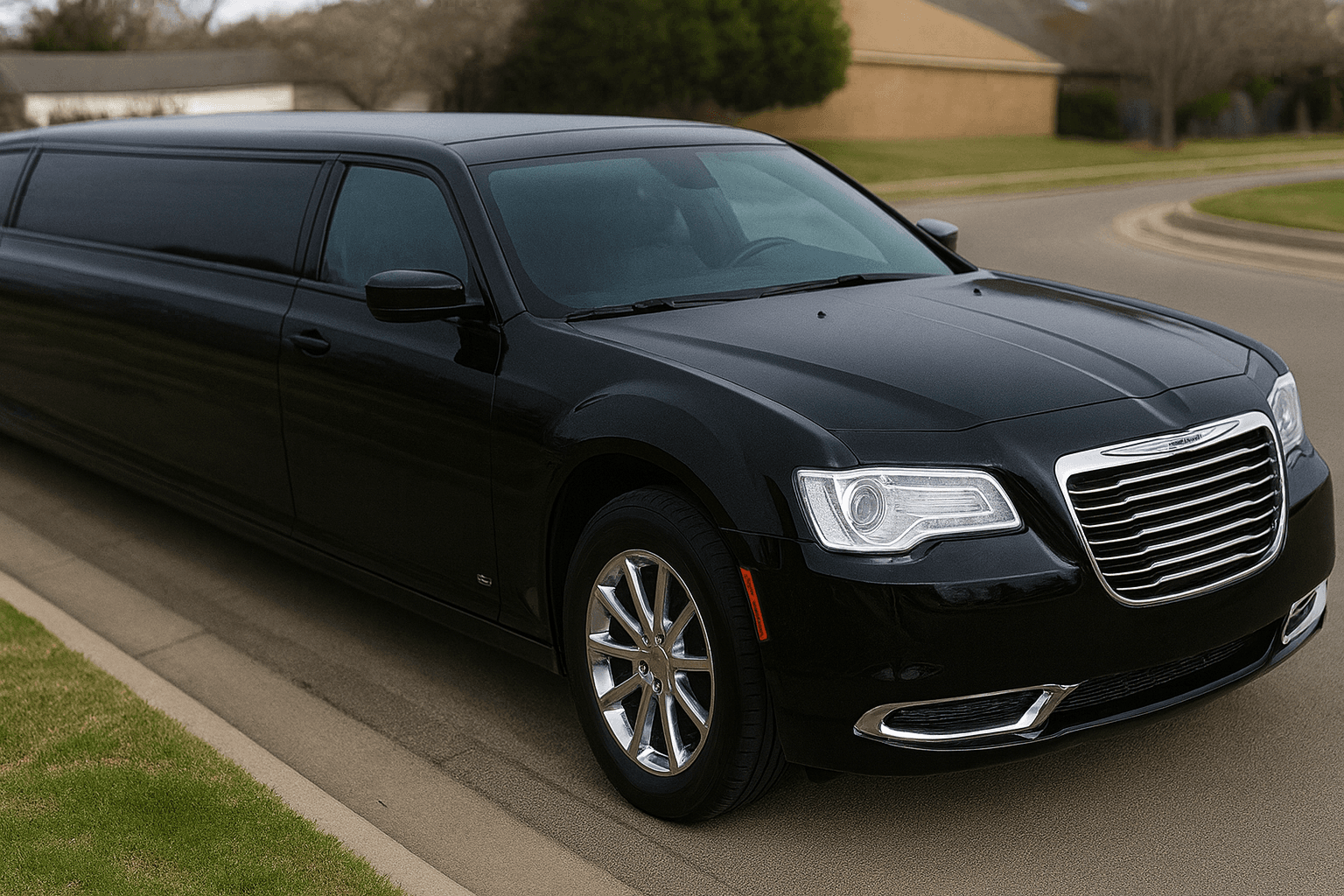
If you have not settled on a size yet, run the Vehicle Size Matcher first and come back. A night like the birthday example above usually pairs with a 20-passenger party bus, or a 24-passenger party bus if you want elbow room and somewhere to put the cake. A smaller formal outing, like an anniversary dinner, fits a 10-passenger stretch limousine and tends to sit at the short end of your estimate.
Long days are a different animal. Once your number climbs past eight hours, forward-facing seats start to matter more than lights and sound, and a coach becomes the kinder choice for a casino run or an out-of-town charter.
What to do once you have your number
Write down the hours along with the four-line breakdown, because someone in the group will ask where the number came from. Then three steps:
- Turn it into clock times. The Event Timeline Builder works backward from a fixed moment, like a dinner reservation or kickoff, to your first pickup time.
- Put it in your request. The Quote Request Builder has fields for pickup time, stops in order and end time. Filling them from your estimate means the first reply you get can be a firm figure.
- Send it. Use the quote form, call, or open the chat. Mention the estimate came from this tool and we will sanity-check your drive times against what our drivers see on those roads.
If your quote comes back with a minimum longer than your estimate, that is normal on a peak evening. Spend the extra time instead of resenting it: a longer dinner, a photo stop at the Margaret Hunt Hill Bridge, or a ride home nobody had to rush.