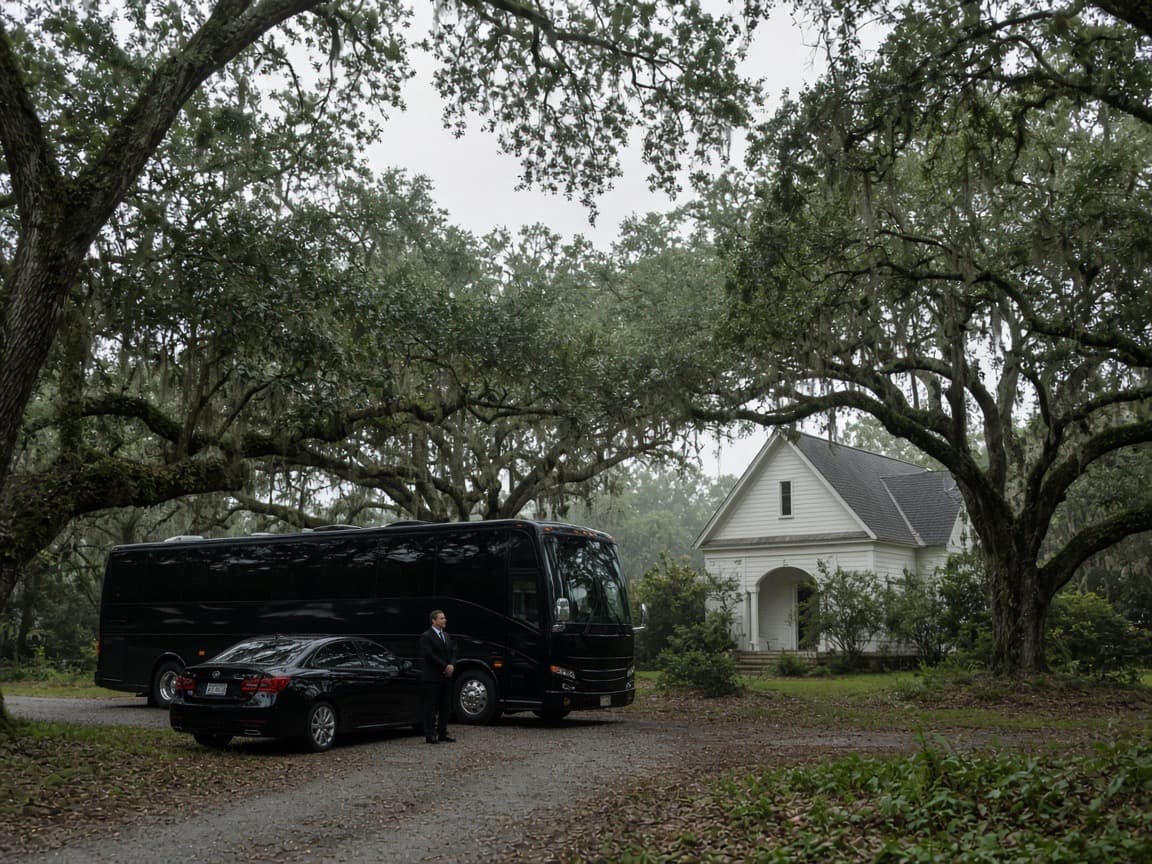
When a family needs more than a hearse
The funeral home will provide the hearse, and often a car for the immediate family. What it usually cannot provide is a way to move everyone else. That gap is where we help, and it tends to look like one of these:
- Relatives who have flown in. Guests staying at one hotel, without cars, who do not know Dallas roads and should not be learning them today.
- Older family members. People who should not drive on a day like this, or who stopped driving some time ago.
- A service in three places. A chapel, then a cemetery, then a reception at a home or restaurant. Three addresses give three chances for someone to get lost.
- Parking that will not hold everyone. Older churches and cemetery lanes have very little room. One coach replaces fifteen or twenty cars.
- A wish to be together. Many families simply want to ride as a group, talk quietly, and not sit alone behind a wheel.
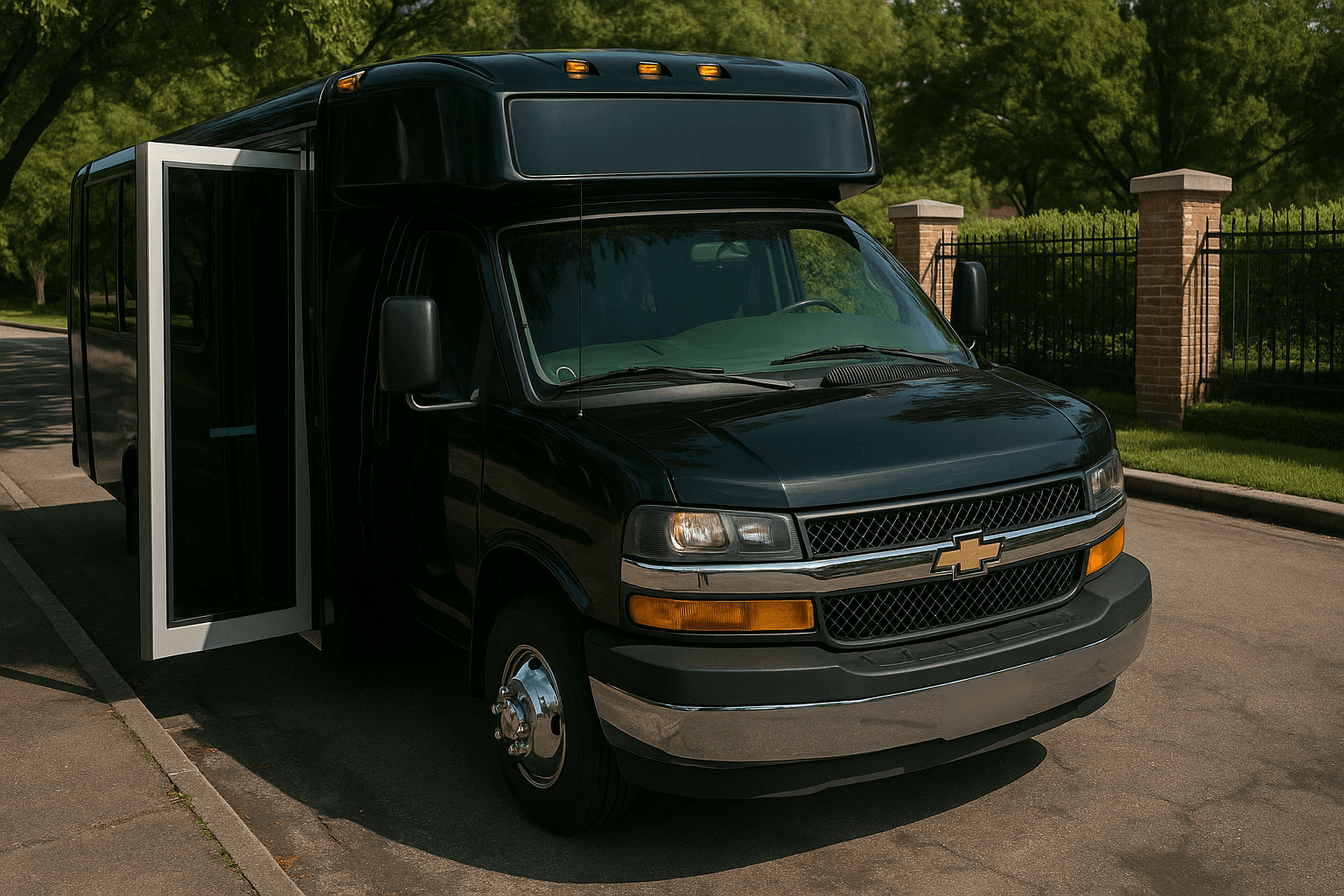
Our part stays in the background. A clean, plain vehicle and a courteous driver who has the schedule, knows the route and keeps quiet unless you speak first. Everything else about the day belongs to you and to the funeral director.
Plain vehicles that suit the day
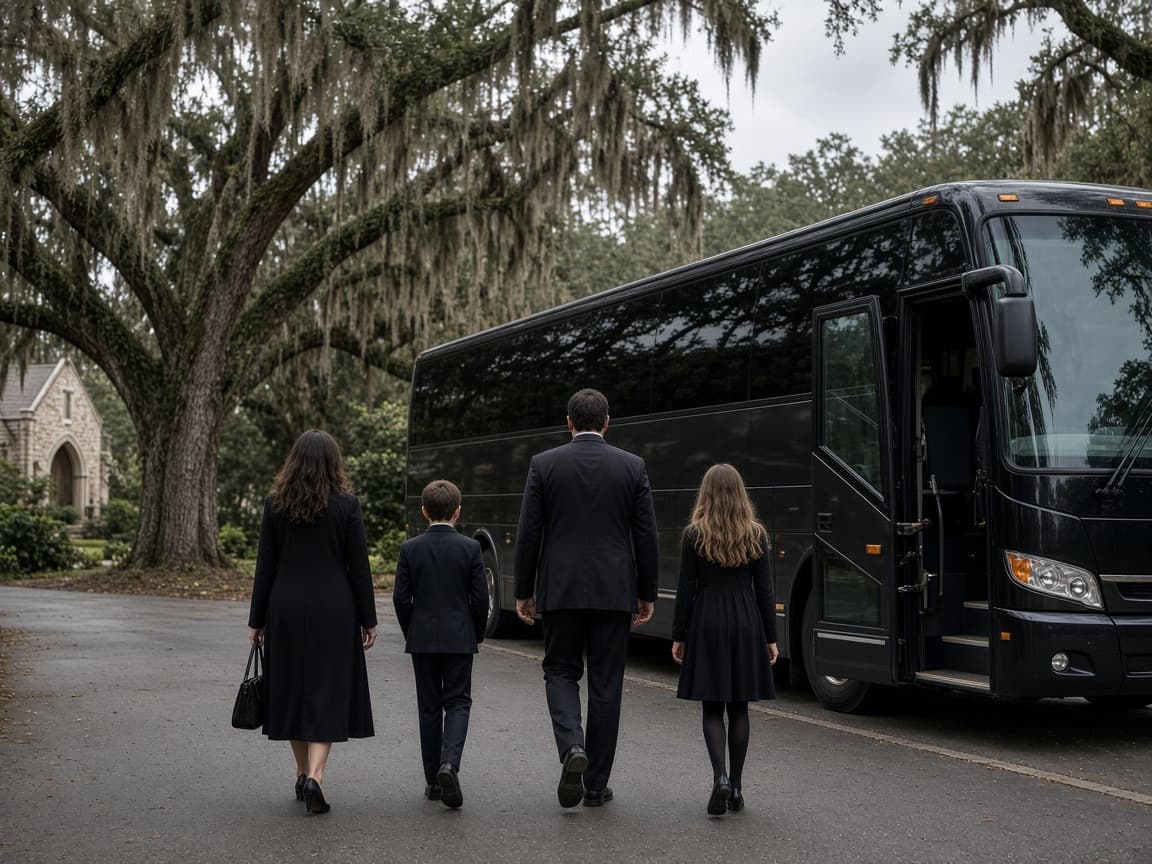
Families travelling to a service are usually small groups. Across our North Texas inquiry data, about 28% of requests are for 10 riders or fewer, and around three quarters are for 20 or fewer. Those figures cover every kind of occasion rather than memorials alone, but they match what we see on these calls: one vehicle for the immediate family, and a second, larger one for guests when a lot of people are travelling in.
| Riders | Vehicle | Typical use |
|---|---|---|
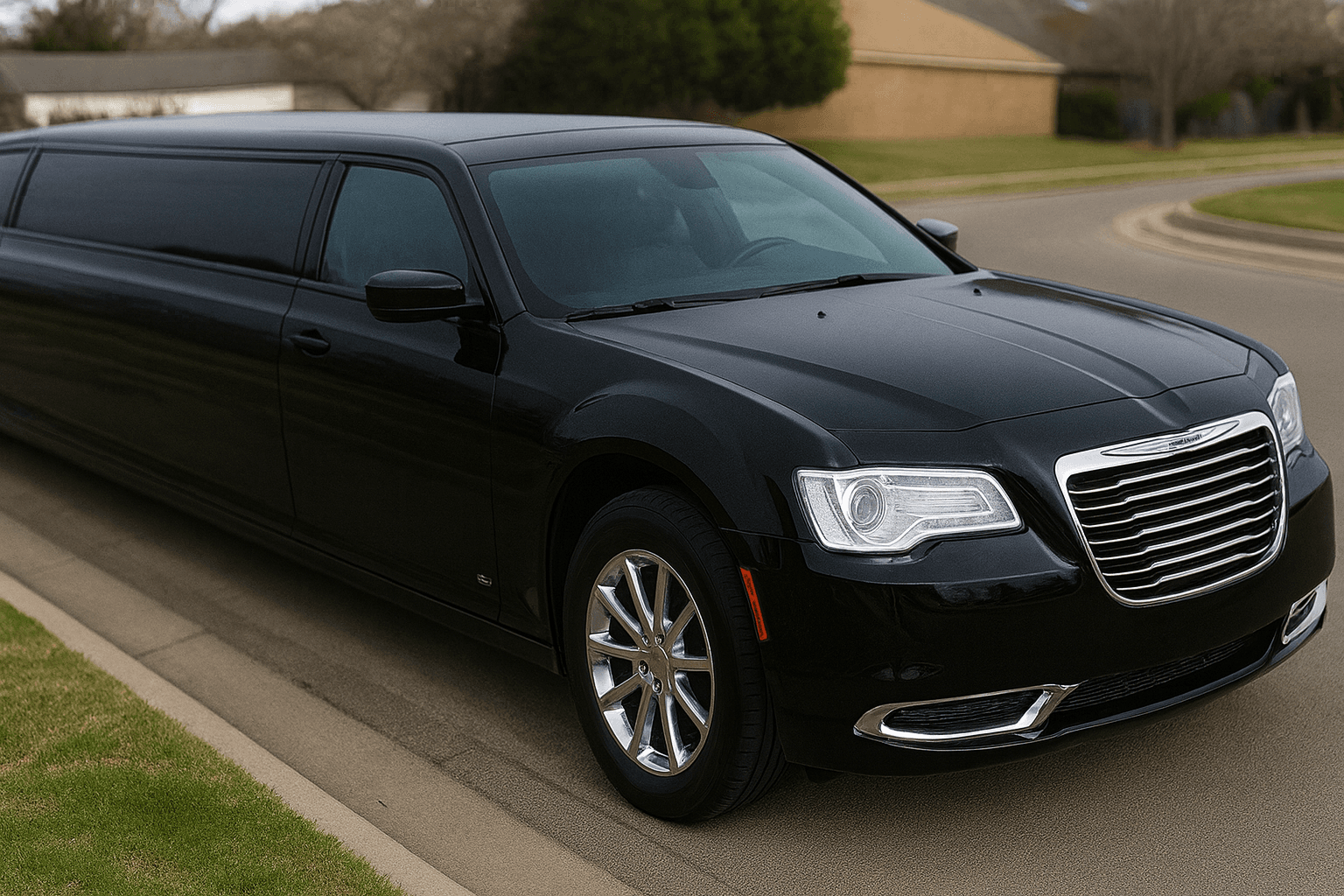
| Up to 10 | 10-passenger stretch limousine in a dark color | Immediate family, following the hearse |
| Up to 14 | Executive Sprinter from our fleet | Family with older relatives who want an upright seat and a wide door |
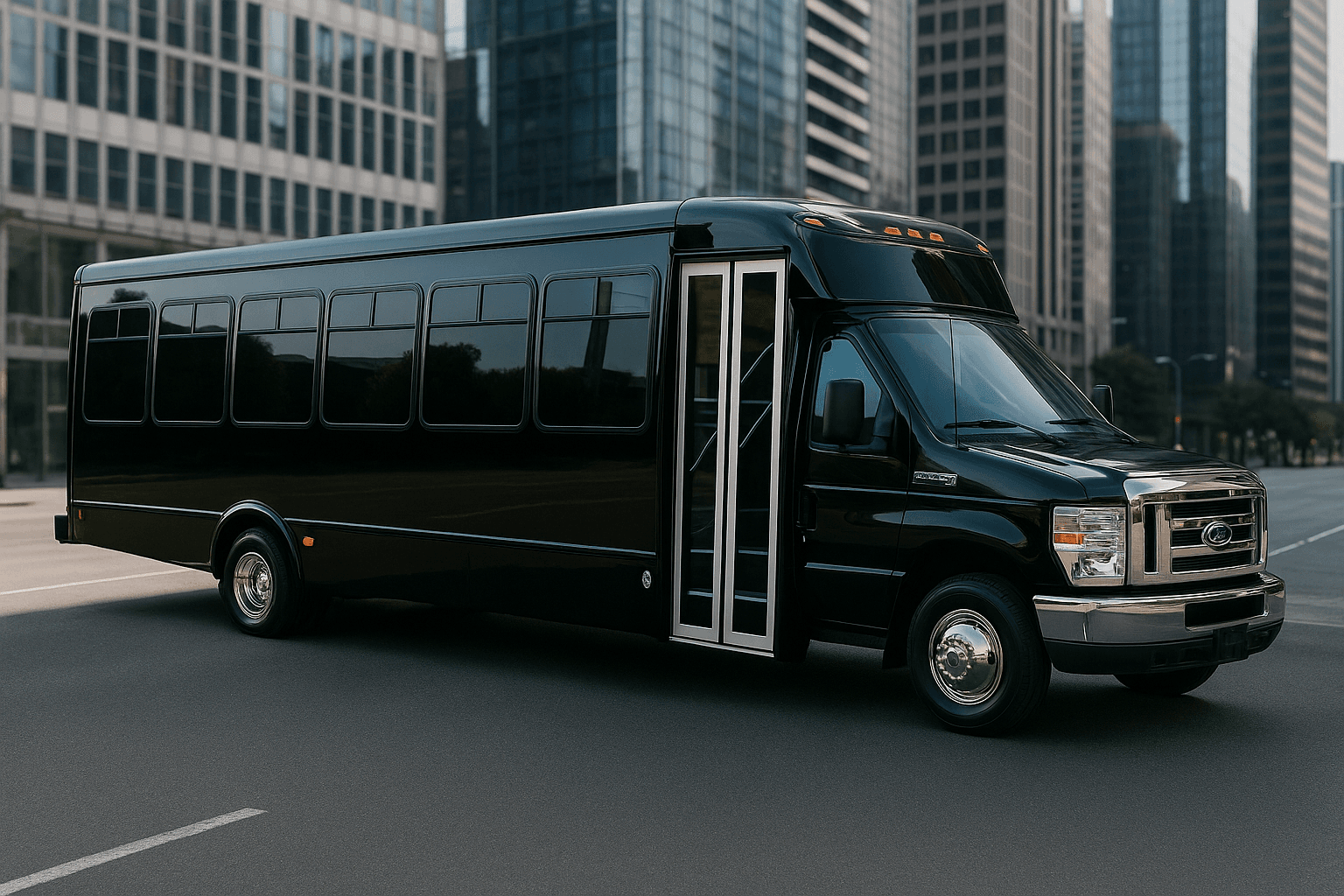
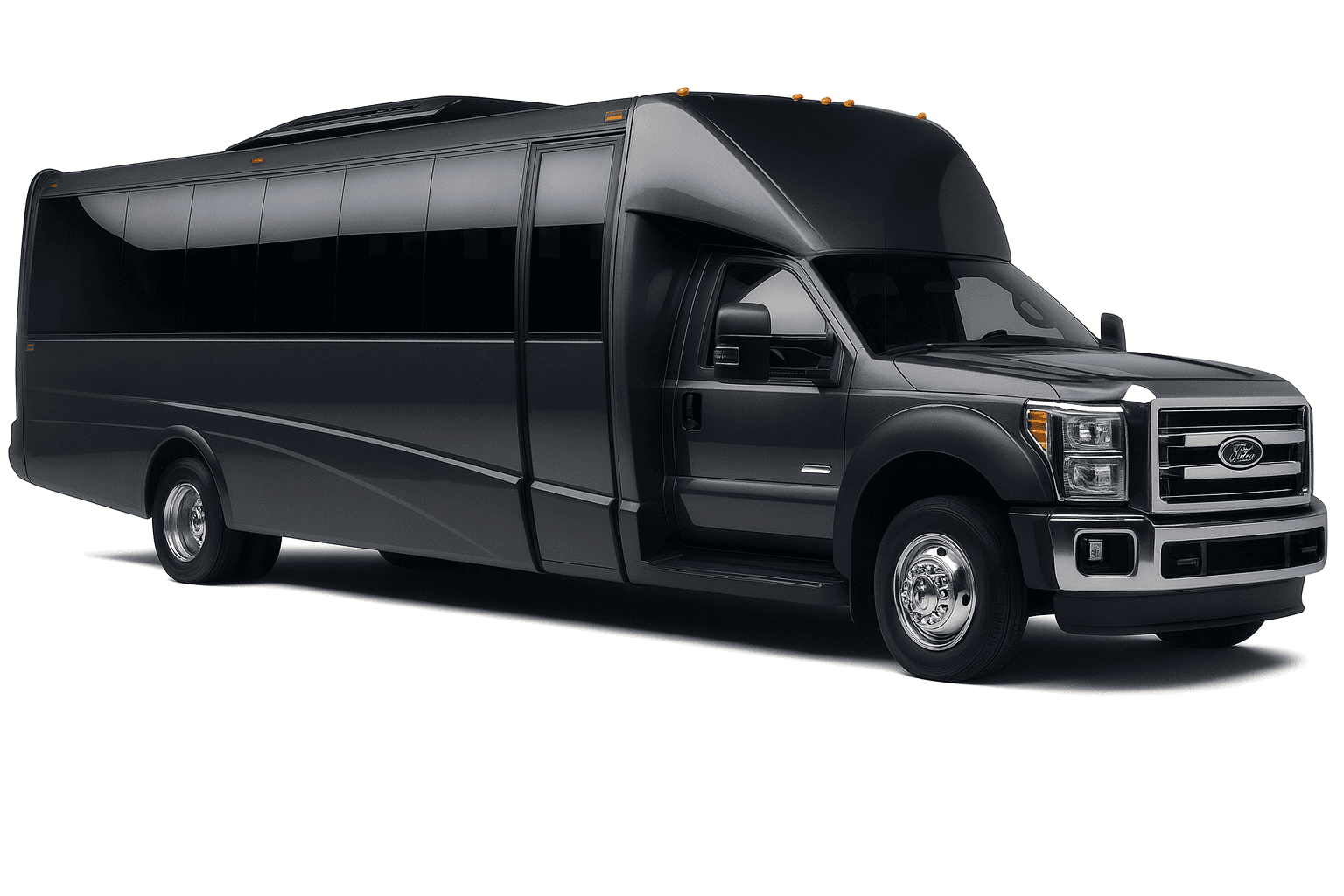
| 15–28 | 28-passenger mini coach | Extended family, pallbearers, guests coming from one hotel |
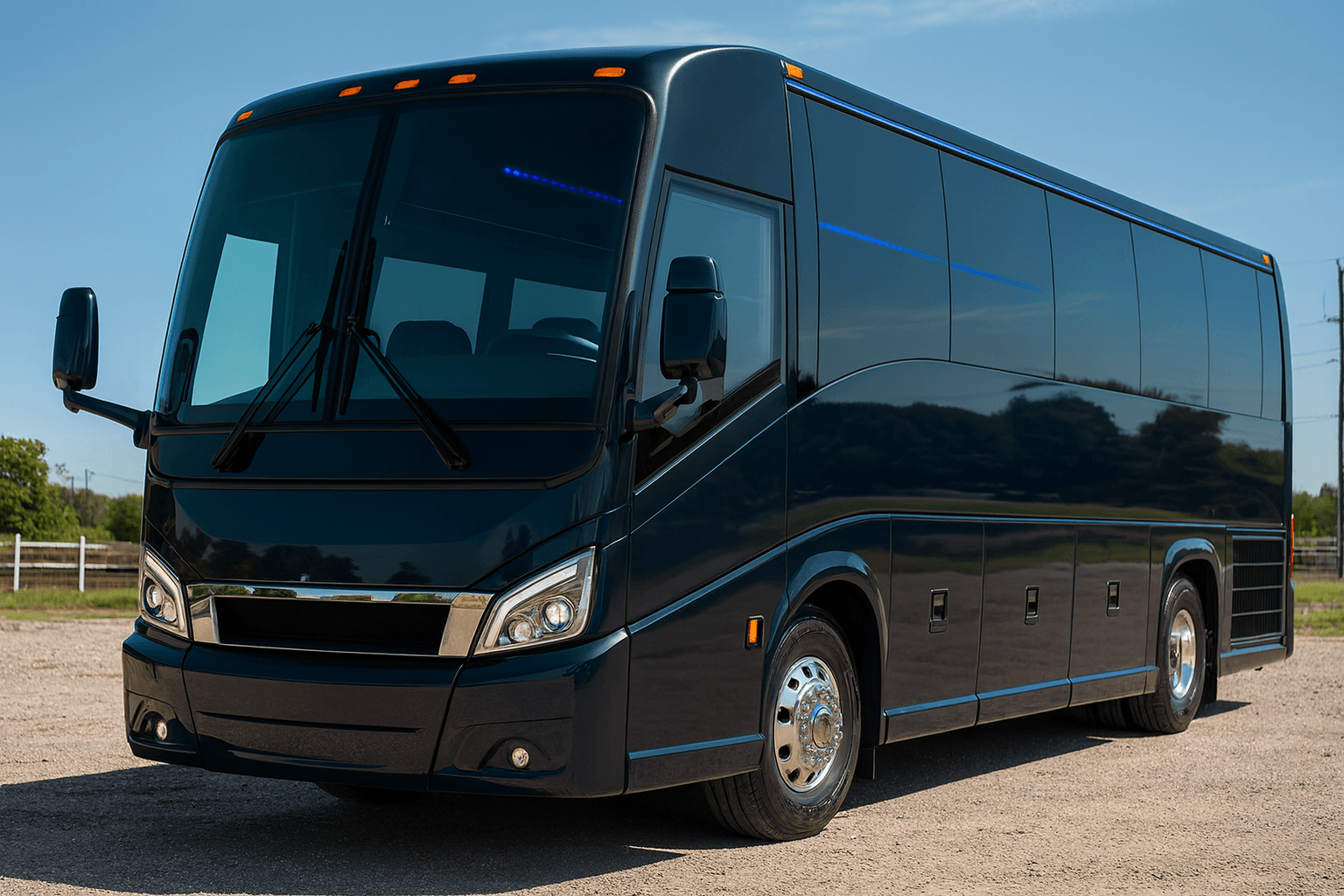
| 29–52 | 40-passenger coach or larger from the coach lineup | A congregation or community attending together |
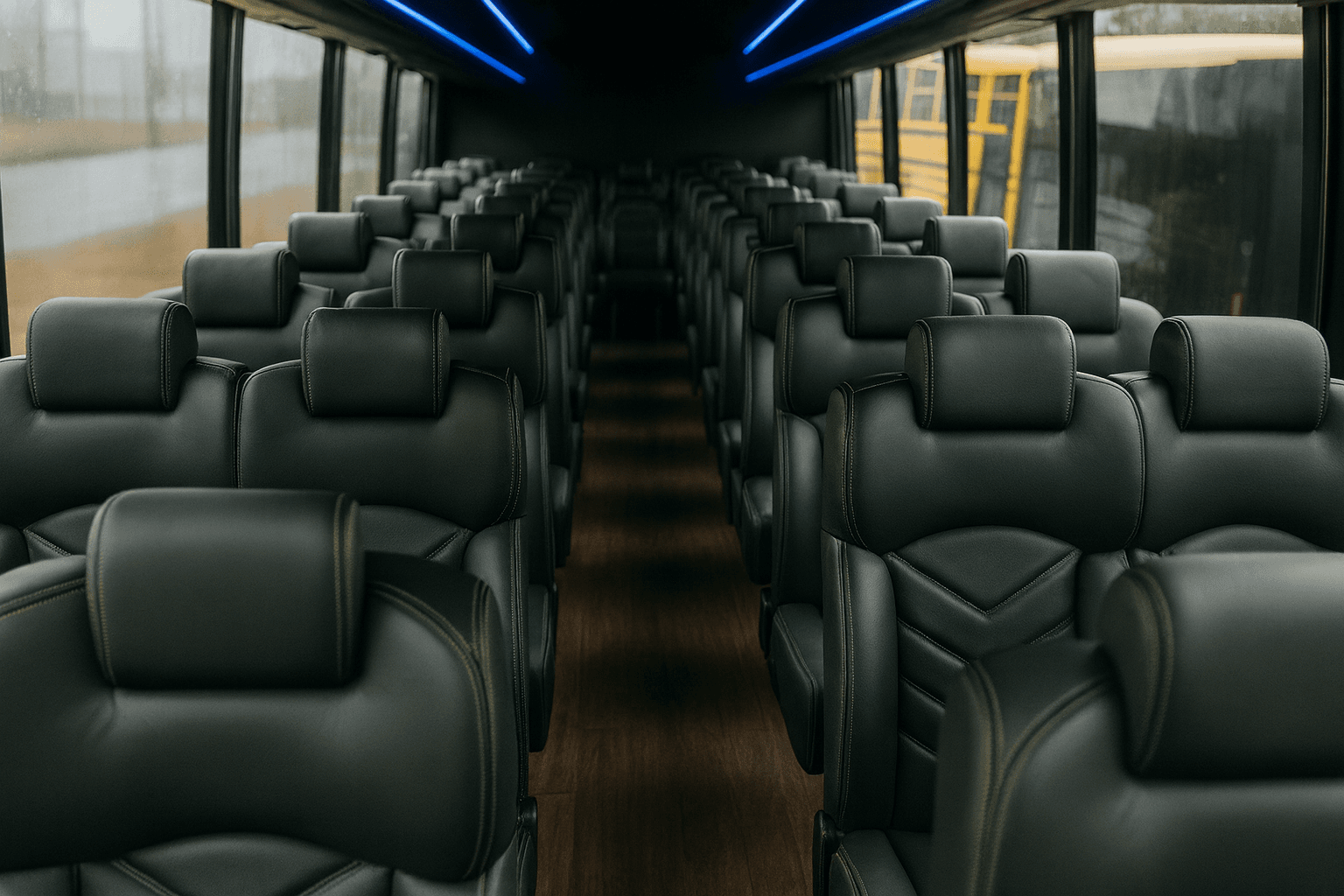
For a service we assign vehicles with standard forward-facing or limousine seating and ordinary interior lighting. Tell us at the start that the booking is for a funeral or memorial and you will only be shown suitable ones. If anyone in your party uses a wheelchair or cannot manage steps, say so in that first conversation so we can talk through the options properly.
1-10 passengers
North Texas inquiries · 719 of 2,557 records(DPR-056)
1-20 passengers
North Texas inquiries · 1,917 of 2,557 records(DPR-035)
Shares of past inquiries, not bookings, prices or availability. How we count these.
Short notice is the only kind there is
Often we can help, and we know there is rarely any warning. Across our North Texas inquiry data, about 16% of requests come in within seven days of the date. A call inside a week is an ordinary part of our work, and our staff are used to moving quickly on one.
We will also be honest with you. Whether a vehicle can be placed depends on the day and the size you need, and nobody can promise a particular bus before checking. A service on a weekday, or on a weekend morning, is generally easier to arrange than a Saturday evening. If your first choice is not open, we will say so in the same call and offer the nearest alternative, which is sometimes two smaller vehicles instead of one coach.
To keep that call short, have three things nearby: the date and start time, the addresses, and a rough rider count. An estimate is fine. If the funeral home is coordinating, we are glad to speak with the director instead, so your family does not have to hold one more conversation today.
Memorials and celebrations of life planned weeks out give you more room. The same details apply, and you can take your time comparing what we send.
0-7 days
North Texas inquiries · 504 of 3,095 records(DPR-065)
8-14 days
North Texas inquiries · 413 of 3,095 records(DPR-067)
Shares of past inquiries, not bookings, prices or availability. How we count these.
Try it: Event Timeline Builder
Work backward from your arrival time
Your result
First pickup 4:38 PM
- 4:23 PMVehicle staged at first pickup
- 4:38 PMPickup 1 — everyone curbside
- 5:00 PMPickup 2 — everyone curbside
- 5:10 PMPhoto stop begins
- 5:40 PMDepart for venue
- 6:15 PMVehicle arrives at venue
- 6:30 PMEvent start / hard arrival time
Want the full walkthrough? Open the Event Timeline Builder page.
How the day is usually ordered
Your driver works from a written schedule agreed with one family contact or with the funeral director. A day with a church service, a graveside committal and a reception generally runs like this:
- Staging. The vehicle arrives at the house or hotel 15 to 20 minutes early, so nobody feels rushed while boarding.
- To the service. Arrival is timed for family seating, usually half an hour or more before the start.
- During the service. The vehicle waits nearby, clear of the hearse and the funeral home's cars.
- The procession. The funeral director sets the order. Our driver takes direction from them and from any police escort.
- At the cemetery. The coach parks where staff indicate, and riders walk with the family to the graveside.
- To the reception, then home. The last drop is back at the hotel or the family home.
You can lay those steps out with times in the Event Timeline Builder; it is a general planning tool, so enter your own stops. Services do run long sometimes. Overtime comes up in only about 1% of the sales calls we analyze, but it is worth knowing in advance how extra time is billed, so that it is one less thing to think about on the day. We set that out alongside the quote.
Overtime and schedule changes
Sales call intelligence · 77 of 5,399 records(DPR-300)
Shares of past inquiries, not bookings, prices or availability. How we count these.
Cemeteries, distances and the drive between
Distances here are larger than visitors expect. A service in North Dallas followed by a burial in the south of the county can mean 45 minutes on the road, and longer on a weekday afternoon. Send us every address beforehand and we will estimate the drive for the hour you are actually travelling.
Dallas-Fort Worth National Cemetery. Committal services there are held at shelters rather than the graveside, on a schedule the cemetery sets. Arriving on time matters, because another family's service may follow yours. The cemetery sits in southwest Dallas near Mountain Creek Lake, a long drive from the northern suburbs.
Older cemeteries and church grounds. Lanes can be narrow, with tight turns and low branches. A full-size coach may need to stop at the entrance while riders walk in, or a mini coach may simply be the better choice. If the funeral home knows the grounds, ask them and pass along what they tell you.
Processions. A coach can join one. The director will place it, normally behind the family cars, and if there is an escort our driver follows them.
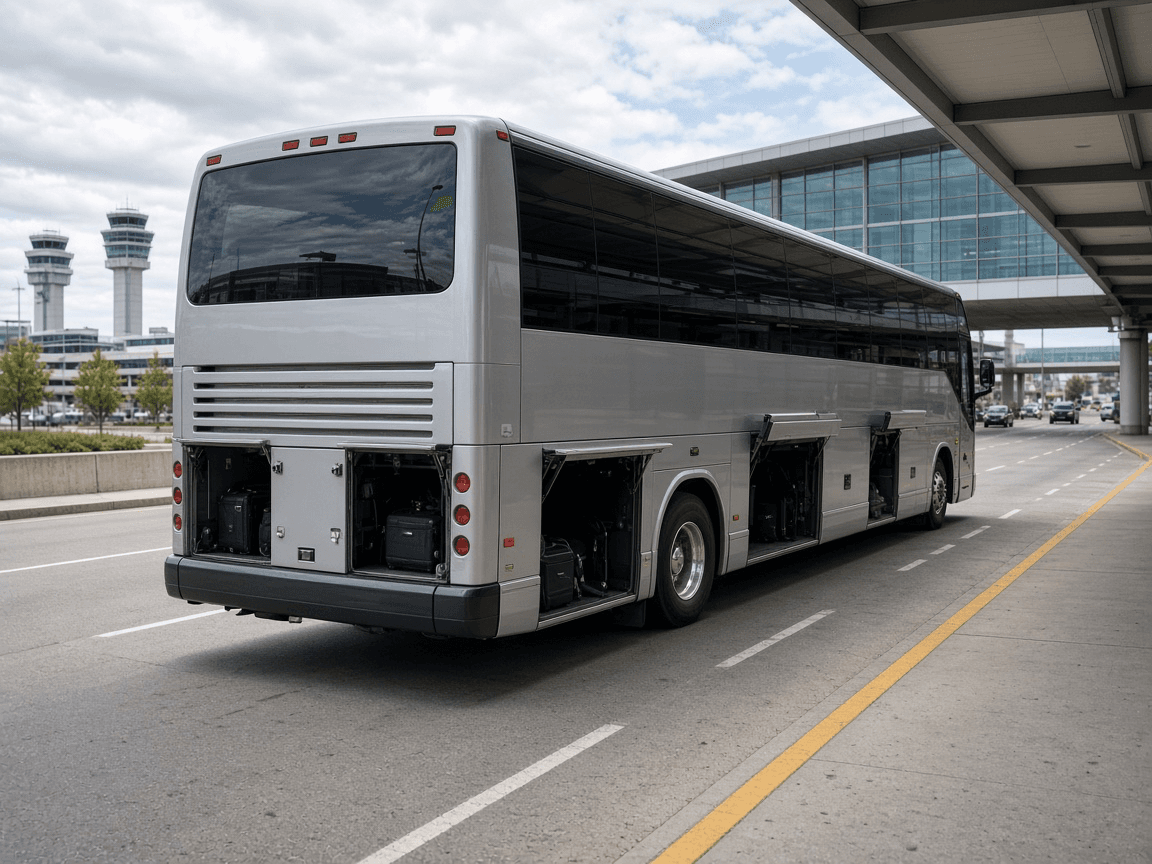
We look after families across the area, including Dallas, Richardson, Garland and Fort Worth. Relatives flying in can be met at DFW International or Love Field; our airport transportation page explains how arrivals are timed.
What the quote is made of
Please ask about cost. Price and quote questions come up in about 49% of the sales calls we analyze, and no family should feel awkward raising it on a day like this. We do not publish rates, because every quote depends on the vehicle, the hours and the date, but we can explain plainly how your figure is reached.
- Vehicle size. A Sprinter or limousine for the immediate family costs less than a full coach for fifty guests.
- Time. A service with a burial and a reception usually needs four to six hours from first pickup to last drop. A chapel service with the reception at the same address needs less. The Rental Hours Estimator will help you gauge yours.
- Distance. A cemetery far from the service adds driving time, and that shows up in the total.
- Gratuity, tolls and fuel. Ask us to fold gratuity into the figure, so nobody is handling cash or a card at the graveside.
You will receive one written total. When several relatives are sharing the expense, it is simpler for one person to pay and settle afterward than to divide a payment. Some families prefer the funeral home to add transportation to its own statement; if that would be easier, tell the director and we will work with them directly where they allow it.
Price and quote expectations
Sales call intelligence · 2,631 of 5,399 records(DPR-291)
Driver and gratuity
Sales call intelligence · 189 of 5,399 records(DPR-298)
Shares of past inquiries, not bookings, prices or availability. How we count these.
What we need to make the arrangements
A phone call is usually quickest when time is short. You can also send us a message at any hour. If writing feels easier than talking just now, the Quote Request Builder will walk you through it one question at a time. We will need:
- The date and start time of the service.
- The addresses: where riders are collected, the service, the cemetery if there is one, and the reception.
- A rough rider count, with a note about anyone who has mobility needs.
- The name and number of your family contact or the funeral director.
- Any wishes about the vehicle, such as a dark color or a particular seating style.
We reply with suitable vehicles and a written quote. Once you approve it and the deposit is paid, the vehicle is held and your driver has the schedule well before the day. If the rider count is the uncertain part, the Vehicle Size Matcher will suggest a size from a range rather than an exact number.
Congregations arranging transportation on a family's behalf may find our church transportation page useful. For services with military honors, see military event transportation. And for a longer journey, such as a burial in a family plot elsewhere in Texas, our charter services page explains how out-of-town trips are planned.